Trivialities

Decline and Fall: D.net’s Fifth Anniversary

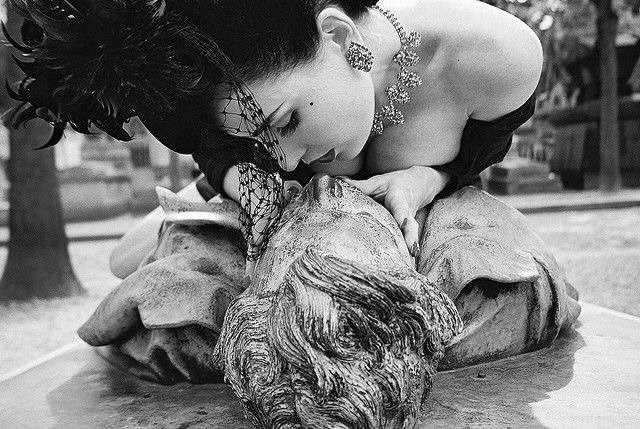
swoon.jpgToday marks the five-year anniversary of Dandyism.net.

Usually our fiscal-year recap is penned by managing editor Nick Willard. He will not be addressing you this year because, like all great dandies, he has gone into exile. No one has heard from him for nearly nine months, and his phone just goes to voice mail.

We suspect he’s in debtor’s prison.

The timing could not be worse. At the same time Nick disappeared, I started up another web project, and have decided to focus my attentions there exclusively. A writer doesn’t spend his entire life on one book, nor a painter on one canvas. I need a new challenge, and what’s more, find that I’ve said all I have to say on the subject of dandyism at the present time. I may return to the topic when I have a fresh perspective.

I feel like I’m letting down the many faithful readers who’ve been with us from the start. But fear not: The forum is still open. And you will likely see an occasional new story now and then. But unless Willard resurfaces, it will never be like it used to be.

But they’ve been saying that about dandyism for 175 years.  — CHRISTIAN CHENSVOLD

A Dandy in Embryo

c-3.jpeg

Eton, 1947.

Spot the Dandy

c-1.jpeg

 Sunday School in Lancaster, PA, 1941.

Questfallen

Rather than becoming more perceptive and informed over time, mainstream articles on dandyism get stranger and stranger — even the ones we’re quoted in.

The latest entry is from Quest magazine, a luxury city mag from New York.

The article in question quotes Chenners at least as accurately as previous articles have, while charting “the evolution of dandyism from Oscar Wilde to Justin Timberlake.”

Yes, you read that correctly.What’s more, personae used to illustrate the article include model Giselle Bundchen, designer Kris van Assche, and other creative choices.

Tradical Chic

md.jpgAstute readers likely noted the clothing Chenners wears in the photo spread in the recent L’Uomo Vogue story on Dandyland and thought, “What a ‘charmless, entitled jerk.’”

Or at least, “What a jerk.”

In the photo, the then-bearded D.net founder is shown wearing a navy blazer (albeit double-vented with ticket pocket), navy and gold striped tie, and yellow poplin Go-To-Hell trousers (it was summer, after all).

Indeed, Chensvold has recently returned to his sartorial roots in classic Anglo-American style. So much so, that he has added another feather in his Stickpin Media cap with the founding of Ivy-Style.com, a site devoted to the classic American menswear sometimes referred to as “trad.”

In other buttondowned news, Chensvold recounts the day Miles Davis walked into the Andover Shop and loaded up on natural-shouldered jackets and penny loafers for the online magazine at RalphLauren.com. The article, called “Ivy League Jazz,” looks at that brief moment in time when the hip and square collided, and innovative jazz musicans dressed like IBM executives.

Misquote of the Week

“What do Beau Brummell, Malcolm McLaren and Ralph Lauren have in common? They have all been obsessed, in one way or another, with the tug of war between self-conscious historicism and cutting-edge avant-gardism that has always defined British fashion. Using clothes as shorthand for social posturing, subcultures ranging from Regency fops to ’60s Mods and Thatcher punks have both asserted and subverted the traditions of polite English society.

“Of course, nowadays ‘‘punk’’ outfits are sold ready-made in every mall, and spat-wearing, umbrella-toting dandies are more likely to turn up in a Ralph Lauren window than in real life.” — Armand Limnader, T Magazine

Romeo Is Breeding

In preparation for round two of Trivial Pursuit, The Test of Dandy Knowledge (see previous post), we suggest poring over the latest addition to the Dandyism.net library in an effort to better acquaint yourself with your dandy forefathers.

The Amateur of Fashion,” is an article on the eccentric Romeo Coates that dates from 1862. Coates was no sober Brummellian, but a butterfly dandy of almost Liberace proportions. When a meeting with the Prince Regent was scheduled, Coates began his fastidious preparations:

His tailor was sent for post-haste, and at least an hour of precious time passed in deciding upon the materials of a new dress suit. The handsomest ruffles, the most perfect cravat, were purchased without delay, and entirely regardless of expense, He was measured for a pair of pumps, that were to be fastened with gold buckles set with diamonds. The diamond-hilt sword was polished all over with wash-leather and a silk handkerchief; and diamond buttons, a diamond brooch, and a diamond ring bought for the occasion.

Max Beerbohm’s take on Coates, written many years later, can be found here.

Trivial Pursuit: The Test of Dandy Knowledge

jc.jpgHow well do you know the history of dandyism? Moreover, how closely do you read Dandyism.net?

OK, so you know Oscar Wilde was tried for indecency by the Marquess of Queensbury for his love affair with Lord Douglas. But what was his prison number? And what name did he travel under after he was released from jail?

Dandyism.net presents the opportunity to test your knowledge of two centuries worth of dandy history and lore. From Beau Brummell to Sebastian Horsley, find out if you’re a philomath or ignoramus when it comes to dandyism past and present.

The 100 questions were compiled by the D.net staff, who not only wrote them off the tops of their heads, they did so while drunk.

The test consists of six categories: The Regency, The 19th Century, The 20th Century, Pop Culture, Dandyland and Dandyism.net.

(Answers appear at the bottom of the post below the image.)

THE REGENCY

1) Which Oxford college did Brummell attend?

2) What regiment did he join after he left school?

3) What was the name of Brummell’s manservant?

4) On what London street is the statue of Brummell located?

5) To whom did Brummell address the remark, referring to the Prince Regent, “Who’s your fat friend?”

6) What grotesque term did George Cruikshank use to describe the insect-like dandies in his caricatures?

7) What night of the week were the balls at Almack’s?

8 ) What early biographer of Brummell wrote, “Posterity will hardly accord to George Bryan Brummell one line in the annals of history.”

9) Of what Regency buck and memoirist was it said, “He committed the greatest follies, without in the slightest disturbing the points of his shirt collar”?

10) In a famous anecdote, Brummell sent a message to a friend saying he needed a loan because all his money was in the three percents. Who denied the loan, coldly saying that all his money was also tied up in the three percents?

11) Where was Romeo Coates born? (more…)

Brideshead Relinquished

brideshead-revised.jpgThe big-screen adaptation of “Brideshead Revisited” opens July 25 in the US. “The Passionate Spectator” columnist Robert Sacheli recently attended a press screening. The following are his thoughts on the film, as well as the charges of sacrilege leveled by fans of the 1981 Granada Television version.

Outrage against cultural debasement becomes a dandy as much as a good pair of white summer flannels, but the new film adaptation of “Brideshead Revisited” has stirred up a level of feverish emotion ill suiting the man of bemused detachment.

Why has the film hit so many exquisitely sensitive nerves? Perhaps because revisiting “Brideshead” in 2008 is less a threat to the cultural legacies of Evelyn Waugh or Granada Television than it is to our own memories of the 1981 series and the role it holds in our lives.

My own sacred and sometimes profanely silly “Brideshead” connections reach back to high school. Despite the questionable erotic themes — and possibly more problematic, the Jesuit bias — the Brothers of Holy Cross judged “Brideshead Revisited” to merit a place on our summer reading list as we headed into junior year. I’m now deeply ashamed that a hasty late-August skim through the novel left no lasting impression except for its cover illustration, a floridly rendered version of the Brideshead fountain with a pair of male and female figures ominously dwarfed by its sculptural glories.

The now-legendary television series, though, was quite another story. I was as guilty of being a “Brideshead”-head as the next impressionable fellow in the early ’80s. I had an English friend record my answering machine greeting with the series theme swelling in the background. Spellings such as “emphasised” spilled from my fountain pen. I admit to have spoken the phrases “unused to wine” and “would your friend care to rumba?” in actual conversations.

In short, I joined a brotherhood of millions who happily fell for a seductive vision of inter-war England as filtered through the lens of Thatcherism. With that memorable baroque trumpet theme echoing in our imaginations, we daydreamed about cricket sweaters, plover’s eggs, and perpetually indulgent nannies.

Yes, we thought, this is when and how we deserved to have lived.

Burnished in our affection by repeated DVD marathons, “Brideshead” was a comforting return to our youth — or at least the imaginary version we’d assembled from Waugh’s seductive characters and the glow of high-level art direction.

So it’s understandable that there might be reluctance towards Brideshead II. Better to boycott the local cineplex with a wearily dismissive attitude.

Sorry to spoil your fun, but this version of “Brideshead” is neither a desecration nor a disaster. Rather it’s a refocused approach to the novel’s story and characters — a necessary step when adapting any work of literature for the screen.

(more…)

Gender Blender

barbey.jpgIf filmmaker Catherine Breillat could be anyone in the world, she’d be the man pictured at left. Yes, the guy who looks like Lemmy from Motorhead dressed for the Dickens Fair.

“I have always said that if I had been born in a different century, I would have been Jules Barbey d’Aurevilly,” says the director of “The Last Mistress,” which opened in the US last week.

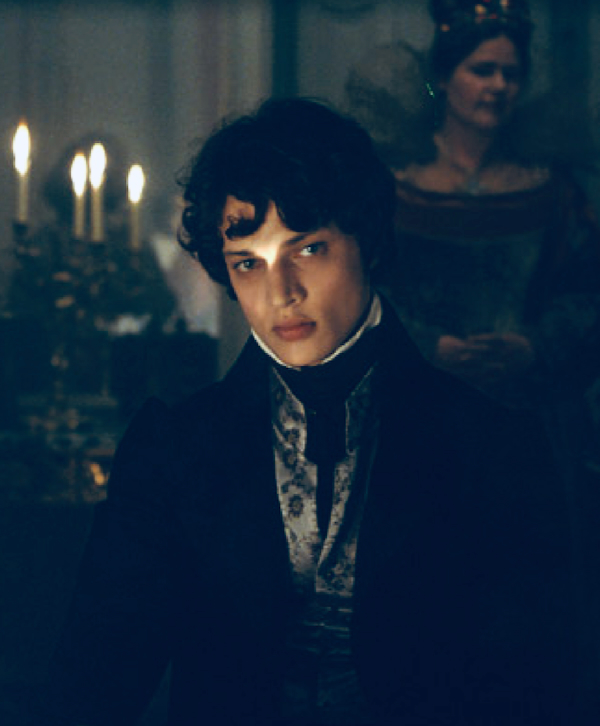
The film, which is loosely based on a novel by d’Aurevilly, centers around Ryno de Marigny, a proud libertine and gambler who strolls through life with his “hands in his pockets and nose in the air.”

The film stars prettyboy newcomer and Angelina Jolie lookalike (emphasis on jolie) Fu’ad Ait Aattou, who had never acted before and who therefore gives off the requisite air of dandy detachment.

Asia Argento, daughter of Italian horror film legend Dario Argento, is the film’s leading lady and a classic belle-laide.

Fans of Barbey’s fiction will enjoy a long sequence in the heart of the film that makes use of his favorite literary device, the recit parlé, or spoken narrative. Breillat’s adaptation also preserves the themes of mystery, revenge, passion and death that permeate all the work of Barbey, who was born in the sign of Scorpio and shares the sign’s preoccupations to the highest degree.

The press kit for the film includes the following remarks from Breillat:

On discovering the book Une Vieille Maitresse: I enjoyed the dandyism, a last shout from the aristocracy. Just like the Marquise de Flers, I am “absolutely 18th century.” The 18th century was more elegant and open-minded than the 19th, when the middle classes came into power, bringing narrow-mindedness and rigorously strict moral principles.

I also loved all these highly androgynous characters. Ryno is a terrible womanizer, a sort of Valmont (DANGEROUS LIAISONS), but he is also, like many dandies, deeply feminine. I’ve often dreamt about Michelangelo and the “Portrait of a Young Man” by Lorenzo Lotto (which is also in the film), about these men of dazzling beauty, a certain feminine beauty, yet without being effeminate.

The story could only take place in an aristocratic environment. When struggling to survive, feeding a family and finding a room for shelter, there is no time for the leisure of romance. Not enough time to experience the pureness. Sentiment can only be expressed in a certain level of comfort where it is not tainted by the harsh realities of life. The way many great authors of that era expressed strong feeling in such idealistic settings has always fascinated me. Aristocracy simply lends itself to the refinery of sentiments.