Elegance Made Casual: The Enduring Style of Fred Astaire
“The Passionate Spectator” columnist Robert Sacheli previously delivered a lengthy appreciation on Fred Astaire. Here, inspired by a new biography on the style icon, he takes a curtain call.
Despite the best intentions of our Founding Fathers, Americans have long been crazy for aristocrats — particularly when it comes to emulating their style. In the 1930s, fashionable men looked to a pair of princes for their cues. One, the Prince of Wales, aka the Duke of Windsor, was a bona fide blueblood, and the influence of his Fair Isle sweaters, midnight-blue dinner jackets, and country-house suits was reflected in the gentlemanly swank of Esquire’s fashion illustrations and in the haberdasheries that catered to the well heeled.
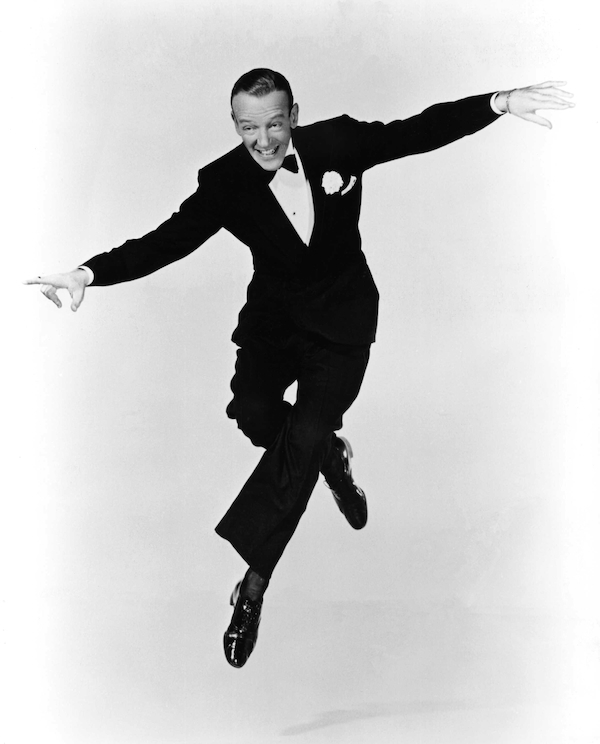
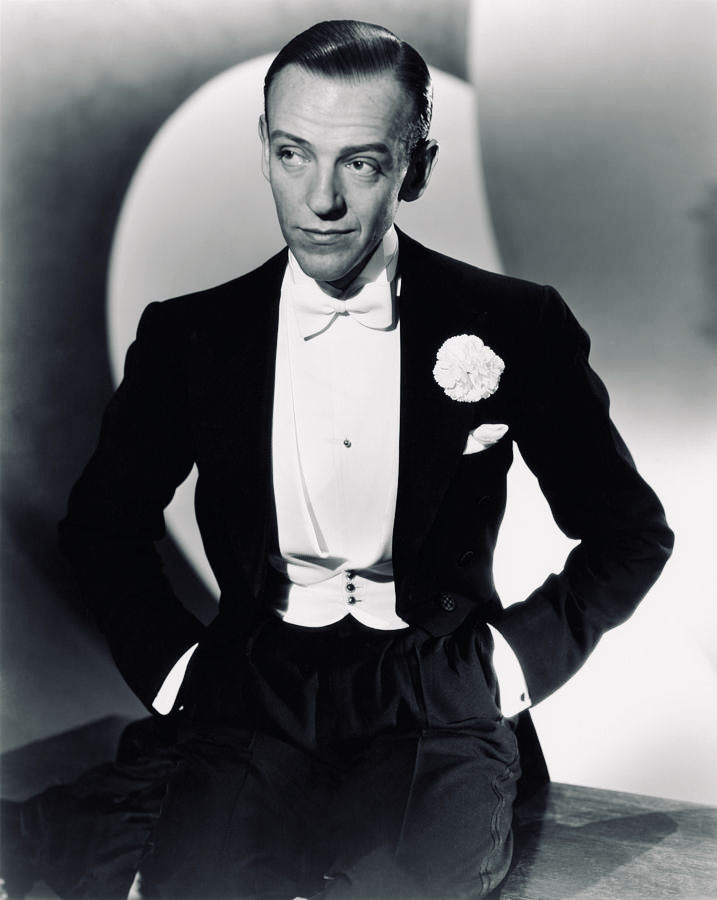
When he foxtrotted off with that divorcée from Baltimore, the dapper Prince abdicated more than an imperial throne. He passed the title of ranking monarch of male fashion to a royal from another powerful, if slightly more mythical, land: Hollywood. Fred Astaire’s reign would prove to be a long one, and his enduring imprint on American style is a legacy as remarkable as his films.
While most of us have happily been content to sit back and watch the man dance, Astaire has long been a magnet for cultural historians, and Joseph Epstein, former editor of The American Scholar, stepped up for his turn on the floor last year with his brief biography, “Fred Astaire” (Yale University Press). The book wasn’t exactly rapturously received (the New York Observer pronounced it “intellectual slumming” and “priggish”), and an extended excerpt in the Hudson Review shows that the carping is justified.
In it, Epstein comes off as alternately snarky, sour, and worst, clueless about musicals — as expected for a highbrow whose works include a volume called “Snobbery.” He’s also not been done any favors by his copy editor. Among other gaffes, he manages to misspell the name of one of Fred’s frequent co-stars, Helen Broderick, and refer to Van Nest Polglase, RKO’s master of the 1930s Big White Set, as an exemplar of Art Nouveau and mangle his name as well. Epstein’s biggest head-scratcher, though, is his assertion that for all the pure joy that Astaire radiated to generations of audiences, he falls short of being a genius. Instead he’s an undeniably talented, perfection-obsessed, but basically dull fellow who can somehow dance up a storm. As Miss Broderick might dryly retort with an appropriate eye roll, “Oh, yeah?” (more…)

On September 17 I had the pleasure of speaking on Lucius Beebe at the Coffee House, one of Beebe’s own clubs. It’s a bastion of a vanished Manhattan, an outpost of the bohemian artists-and-writers world of the 1920s and ’30s. It’s still governed by its founding credo from 1915: “No brokers or bankers and perhaps no drama critics. No card playing. The club to be for sculptors, artists, foreigners, illustrators, authors, editors, professors, sportsmen, lawyers, actors, singers, playwrights, musicians, inventors, composers, statesmen, judges, etc.”
The big-screen adaptation of “
Herein follows the final chapter of Robert Sacheli’s biography of Lucius Beebe, which depicts the subject in his final years haunting the modern world like an elegant phantasm. 
When Dandyism.net launched four years ago, we stated as our mission the desire to rescue the dandy from the slag heap of history through rigorous scholarship and unflinching self-righteousness.
Fred Astaire lounges in a swank London flat, attired in a speckled dressing gown and cravat, musically daydreaming about the girl he’s just met. He’s smitten, but true to the plots of his films with Ginger Rogers, he doesn’t know the girl’s name.
Hugh Grant, that blend of Christopher Robin and cuddly roué, is the ideal cinematic Englishman. Take the hesitant stutter and the shyness of his “I can’t quite look at you” glances when romantic ardor sets him a-flutter. Once the self-deprecating head bobble reaches full throttle and that adorably thatchy forelock gets loosened, he becomes the actor’s equivalent of a Pimm’s Cup: jaunty, pedigreed and oh-so-English.