The Sophistocrat by Michael Mattis

Grey Poupon: The Lost Footage

American readers of a certain age will remember the old TV commercial for Grey Poupon, a Dijon mustard now made by food-biz megalith, Kraft. (“So fine, it’s even made with white wine.” Fancy that!) In it, one chauffeured Rolls Royce pulls alongside another. The well dressed man in one leans out and asks the impeccable man in the other, “Pardon me, but would you happen to have any Grey Poupon?” The original ad aired in the 1980s.

Fast forward to 2013, when all things vintage — and faux vintage — are in style, from the new-to-retro Fiat 500 to Banana Republic’s “Mad Men” apparel collection. And Kraft and its agency CP+B have seized the day, back-filling the original with clever CG and new footage that tells the story of what happened after the first encounter, Bond-style.

Enjoy.

GQ on Beau Brummell: It Just Doesn’t Suit

When it comes to turning to Beau Brummell for inspiration, even people in the men’s fashion world get it wrong from time to time—and more often.

Popular misconceptions include:

  • Beau Brummell invented the tuxedo (or at least black-and-white for men’s evening wear)
  • That he employed several glove makers to make each pair of gloves
  • That the Prince Regent broke with Brummell over the impertinent demand, “Wales, ring the bell!” during one of their late-night piss-ups. (Brummell denied this episode repeatedly while en Caen.)

Over time these legends and others have taken on a life of their own, in part because Brummell’s wit tended toward the exaggeration of trifles. He liked to mess with people’s heads.

Still, we were not quite aghast to read this piece on the website of GQ, that venerable organ of manly style formerly known as Gentleman’s Quarterly. We were, however, nonplussed.

It starts out all right:

“Every time baggy, pleated, and yet somehow tightly tapered pants come back in style, there’s a chance that cuff might creep up the calf inching our fashion standards back to the time when men wore tights and breeches and everyone had the plague… To know how we have have arrived at our current sartorial epoch — and why we must defend it — we need first understand how we broke from the ‘ballet look’ in the first place. And for that, we have one man to thank: Beau Brummel.”

True enough for those who care to “defend” such things, except for the repeated spelling of Brummell’s name as “Brummel.” We can’t fault the author, Micah Fitzerman-Blue, overmuch for this, however. The original French editions, as well as some English translations, of Jules-Amédée Barbey d’Aurevilly’s “Du Dandysme et de Georges Brummel” spell the man’s surname with only one “L.” It’s an easy mistake.

But then Fitzerman-Blue goes on to describe Brummell’s father as an “upper middle-class politician.” He wasn’t. William Brummell was in fact a bureaucrat, the private secretary to Lord North, Prime Minister of England from 1770 to 1782. Bill Brummell never held elective office.

Then there’s this:

“Between preening, plucking, polishing his boots with champagne (fact), and spending upwards of £800 a year (over $120,000 today) on tailoring, Brummel solidified his relationship with the Prince, and established his status as London’s style icon.” [Emphasis ours.]

No, not fact. As Nigel Rodgers points out in his soon-to-be-released book, “The Dandy: Peacock or Enigma” (of which more anon), “… the story that he used champagne as boot blacking is clearly a Brummell joke—champagne is sticky.” [Emphasis Rodgers'.] Anyone who has ever bungled an inebriated toast at a wedding should know this, and the apocryphal nature of this story has been pointed out in several previous works.

Finally, there’s the kicker:

“All that fuss actually resulted in something decidedly unfussy: full-leg trousers with matching jacket, a white linen shirt, and an ascot. In other words, a suit.”

We have a few other words. Brummell didn’t invent the suit any more than he invented the tuxedo. In fact, men had been wearing suits—coat, vest and some form of leg wear (usually breeches) of one matching fabric or another—for more than a century prior. Brummell never wore one. His day costume consisted of a blue coat, white or buff colored vest, fitted buff trousers and Hessian boots. For evening, he wore a blue coat and black trousers that closed tightly around the ankle. Brummell never used the word “ascot” unless to identify the town of that name in Berkshire or the horse races that have been taking place there for some three centuries now. Brummell wore—and wore exquisitely—a cravat. The ascot tie did not appear until several decades later.

In his biography, Ian Kelly quotes Brummell as saying, “I, Brummell, put the modern man into pants, dark coat, white shirt and clean linen.” In that sense, Brummell is the progenitor of modern men’s dress, but that’s hardly the same as saying that he came up with the suit as we know it today.

We should note that Fitzerman-Blue is not a staff writer for GQ but works for a commercial outfit called Bureau of Trade. Its mission is “finding, curating, and selling quality goods, while educating guys on what it is they’re actually buying…” (In this case, a Tom Ford Black Fleece suit.) Here’s to “finding, curating and selling.” Now if Bureau of Trade would only get the education part right—or maybe GQ should hire Esky to do a little fact checking.

News and Notes: The Bowler, a Dandy Talk, and Celebrating Ivy Style

It’s been a while since we lasted posted. Your correspondents have been busy, mostly answering the dolorous call of that cruelest of pagan idols, Mammon. Such is the frenzy of the modern world. But we do have news of a dandiacal nature to impart to our faithful myrmidons around the globe.

First up, D.net founder and Ivy-Style.com impresario, Christian Chensvold, has re-invigorated the pages of The Huffington Post with a new style column. Last week, Chensvold posted a piece headlined “Old Hat: Broker’s Gin and the Fate of the Bowler.” It’s a charming column for a number of reasons. Written in the inimitable Chenners Deadpan Style™ one is hard pressed to know whether he’s serious or having us on for a lark. (We suspect a little of both.) The hook, which is that Broker’s Gin—capped with miniature bowler hat—is currently the fastest selling gin in U.S., dovetails nicely with a chat about the fate of said headgear in the contemporary world.  Your correspondent was honored to be gently pilloried for recently having bought and even occasionally wearing a Christy’s bowler (or derby or coke if you prefer) on the town and for special occasions.

Next, our friend, that redoubtable dandizette, Rose Callahan of The Dandy Portraits fame will be offering her unique photographic perspective at Dandy Talk, a seminar to be held October 5, 2012 at the elegant National Arts Club in New York City. She’ll be joined by Matt Fox of the Fine and Dandy Shop, manners expert Thomas P. Farley and Nathaniel Adams, a writer and the manager of Against Nature Atelier. Admission is free but be sure to RSVP. Nonplussed by idle dandy chatter? Never mind, the event is sponsored by Hendrick’s Gin, which will be providing cocktails.

And finally, if you haven’t seen it already seen it, the Ivy Style exhibit at the Fashion Institute of Technology opened in New York City on September 14. It explores the golden decades of upper-crust, Ivy League college style—that conspicuously casual and uniquely American form of dandyism. If the name sounds familiar, it’s because ol’ Chenners, noted above, is heavily involved in it. Also on the hook for the history notes is Richard Press (of J. Press fame), curator Patricia Mears, Christopher Breward, Masafumi Monden and others. Click over to Ivy-Style.com for more details and updates. The exhibit runs through January 5.

Can’t make it to the Big Apple? Watch the video embedded below…

…or buy the book.

Dandy on Wheels?: The New Cult of the Bicycle

When one considers the classic dandyish modes of conveyance, the bicycle does not at first blush top the list. Rather, one first thinks of the horse (either actually ridden or merely wagered upon), followed down through history by the yacht and the doomed first-class ocean-liner, then perhaps in the air by the Graf Zeppelin, the private plane, the China Clipper and, finally, the Concord. On the ground, the classic roadster springs to mind (as does the racing car (à la Porfirio Rubirosa), followed by the chauffer-driven Rolls and the Town Car.

But the bicycle? Not so much.

There is, however, a growing movement afoot that may change this common conception. They’re called “tweed rides” or “tweed runs” and they’re happening periodically in cities across the Occident. At these events, participants get decked out in their tweedy Sunday best and take their classic (or neo-classic) bicycles for a leisurely cruise across town to some designated pastoral spot or watering hole, where the party really begins.

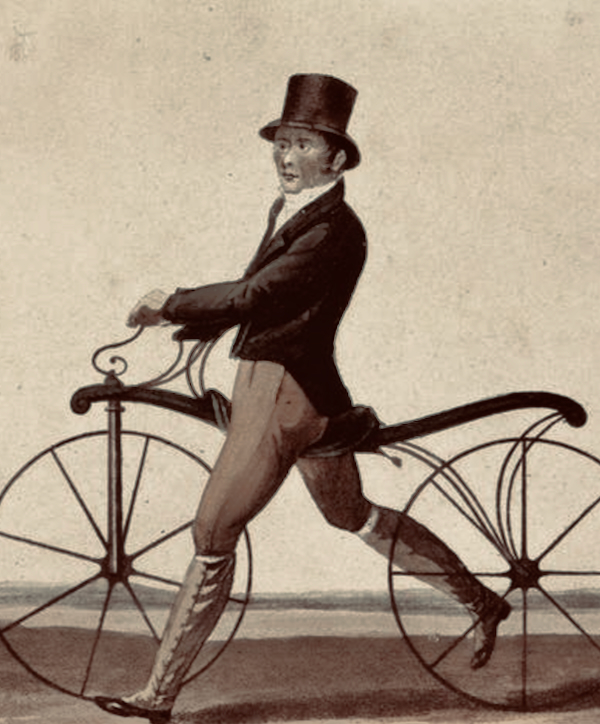
This may be fair to the venerable velocipede. The first “bicycle” – that is, a two wheeled, human powered transport – was invented in 1818 by a German baron. Aptly nicknamed the “dandy horse,” this bone-shaker was simply a wooden frame over a pair of in-line metal wheels and a handlebar for steering. The rider straddled the contraption and pushed it forward like a kick scooter, setting off his tight-fitting, instep-strapped “inexpressibles” admirably to the ladies. (Talk about sacrificing comfort and practicality on the altar of style.) Later in the 19th century, bicycles more or less as we know them today were all the rage among fashionable urbanites wanting to zip around town rapidly. The bike-riding Oxford student in tweed jacket, flapping robe and mortarboard cap is among the most classic images.

Through the magic of the googling engine, we were recently apprised of an article in the Washington Post about an upcoming “Seersucker Ride” (June 9) sponsored by a D.C. outfit calling itself “Dandies and Quaintrelles.”

The article quotes a Ms. Holly Bass, identified as a “performance artist” who organizes D and Q’s cycling events. “It’s as much about an attitude as it is about a style of dress,” she told the Post. “It’s about harking back to an era when the way in which you presented yourself was viewed as a reflection of respect, courtesy and manners.”

(more…)

Wild Dandyish Rose: Six Questions for Rose Callahan

Hugo Jacomet of Parisian Gentleman, Paris. Courtesy, Ross Callahan.

Rose Callahan is notable for, among other things, her work in creating The Dandy Portraits, in which she catalogs the “lives of exquisite gentlemen today”—contemporary dandies and modern retro-eccentrics alike. Ms. Callahan’s commitment to outstanding men’s style, as well as her eye for detail and superior photography, prompted Dandyism.net to get in touch with her and ask a few questions.

Ms. Callahan is a native of San Francisco—an increasingly rare thing nowadays. She studied photography at the venerable California College of the Arts, founded in 1907 by Frederick Meyer, one of the lodestars of the California Arts and Crafts movement. Ms. Callahan shares a legacy with such West Coast luminaries of aestheticism as Gillette Burgess (founder of The Lark), Willis Polk and Bruce Porter. It’s no wonder she has such an acute sense of the minute details of her craft, or that she was called “the most amazing woman on the planet” by the authors the Fine and Dandy Shop’s weblog.

Ms. Callahan tells us she was inspired to take up photography at an early age by her mother, who was passionate about the art. Her early heroes included Man Ray, Brassai, George Hurrell, Robert Frank, Bruce Davidson, Helen Levitt, Diane Arbus, Mary Ellen Mark and Hollywood glamor portraits.

As a freelance photographer, Ms. Callahan shoots portraits and fashion plates for clients such as Grey, McCann-Eriksson, Scholastic, Random House, the Gilt Groupe and so forth. Recently she has been creating short films at her own Rarebit Productions, focusing on her favorite subject, the exquisite gentleman. She is currently collaborating with journalist Nathaniel Adams on a book proposal for The Dandy Portraits. She now lives in New York City.

Winston Chesterfield of Le Vrai Winston,  London. Courtesy Rose Callahan.

Michael Mattis: When did you first hear the word “dandyism?” How did you react to it?

Rose Callahan: I don’t ever recall not knowing the word, but my understanding of it must have come from watching reruns of BBC shows on public TV.  It was usually in context of “he’s a bit of a dandy,” meaning or insinuating somewhat of an eccentric English gentlemen, but with a rakish quality, and of course, a sharp dresser. The Kink’s song “Dandy” was definitely also part of my awareness of the term.

(more…)

Gieves Hawked

When serendipity knocks you have to be there to answer the door.

It was a while ago when serendipity gently scratched like a hopeful paramour. Bored one afternoon I had gone to see a movie matinee at the independent Clay Theater up in the “nice” part of Fillmore Street in San Francisco. The film was what my father would call “a cute little movie;” not a blockbuster shoot-‘em-up by any means, but rather a nicely put together character study. “The Great Buck Howard” stars John Malkovich and includes a brace of cameos by Tom Hanks, who also produced it. The movie deals with an eccentric TV psychic, loosely based on the real life story of The Amazing Kreskin, who appeared on the Tonight Show with Johnny Carson dozens of times. It’s a good renter.

Anyway, after the film I decided to stroll across the street to The Junior League of San Francisco Next-to-New Store. As even the most lackadaisical boulevardier should be able to surmise, the Junior League is one of those tony, old-money institutions that benefit a plethora of causes which, luckily for the organization, never seem to improve enough so that the League’s charity can ever be turned down.

As a deadbeat dandy, I’ve had a certain amount of luck at the Junior League shop in the past, finding articles such as cast-off Dunhill ties and never-worn Church’s English shoes. That day I started at the suit and sport coat rack, flicking through it with my usual, speedy, “Nope-flick, nope-flick, nope-flick.”

I looked around and spied a second, free-standing rack next to the one I’d been flicking through and went to take a look. My hand alighted on a soft wool navy blazer. I pulled it out. It was double-breasted, four-on-six, with three buttons on the cuffs and no vents. It had conservative shoulders. I looked more closely. The gold-colored buttons bore the stamp, “G&H.”

I could feel my palms beginning to sweat.

(more…)

It’s Official: Dandyism.net Founder is Big in Japan

Dandyism.net founder and erstwhile editor-in-chief, Christian “Chenners” Chensvold has cracked the code that lies at the four-point crossroads of contemporary dandyism, trad, preppy and Ivy League style—in Japan. He was recently profiled in the Japanese magazine, Free & Easy.In 2008, Chensvold founded Ivy-Style.com, a website devoted to the Ivy League look, its history and its place in American—and, indeed, international—culture. Two years ago, Chensvold pulled up his California stakes and moved his operation to New York, to be nearer the epicenters of publishing, culture and style. There he met classic men’s style greats like G. Bruce Boyer and Richard Press. And Ivy-Style.com thrived. Recently, he was appointed an editorship at the venerable New York high society magazine, Quest.

(more…)

Dandy in the Otherworld: In Memory of Sebastian Horsley

Michael Mattis, who has previously written about Sebastian Horsley for Dandyism.net, offers this remembrance.

Dealing with death is always a hard thing. Dealing with the death of someone you have written about is harder still — especially when what you have written about the deceased is not all that nice.

Frequent readers of Dandyism.net will be well within their rights to expect us to slam Sebastian Horsley even in death. But they will be disappointed. For one thing, it does not fall within the purview of a gentleman to speak ill of the dead. What follows is, rather, a grudging appreciation.

First, the facts: According to news reports, the body of Sebastian Horsley, 47 —artist, writer entrepreneur and showman — was found at about 11:00 A.M. GMT on Thursday, June 17, in his small apartment in Soho, London, by one of his lady friends. He had apparently died of an overdose of heroin.

A few evenings before, Horsley had seen the play about his recalcitrant life, based on his memoir, “Dandy in the Underworld.” The play was written by Tim Fountain. It was to be made into a film, produced by his friend, the actor, writer and director Stephen Fry of “Wilde” and “Jeeves” fame.

(more…)

Wilde in Chinatown

oscar_wilde.jpg“Chinese art possess no elements of beauty.”

Oscar Wilde offered up that curious opinion on a San Francisco-bound ferry boat to a crowd of reporters anxious to record his first impression of the city, which at the time supported one of largest communities of Chinese outside the so-called Celestial Empire. Wilde had been in the United States since January, lecturing the colonials on interior decoration, art, design, and an obscure subject he called “The English Renaissance,” ahead of the Gilbert and Sullivan light opera, “Patience.” By this sunny morning in March, 1882, the Irish poet and aesthete had wended his way across the continent to “the Occidental uttermost of American civilization,” making a sensation in big cities and mining camps alike along the way.

Wilde had been averse to things Chinese since boyhood, when he heard a Chinese “fiddle” at an exhibition in Paris. “I… could discern no music in it,” he told the reporters.

While Wilde had seen “much that was admirable” in the arts of Japan, whose blue vases and delicately painted fans were all the rage of the Aesthetic Movement back in London, he found in Chinese art that only “the horrible and grotesque” appeared “to be standards of perfection.”

Wilde had ventured his comments after asking a reporter to point out where the city’s Chinese settlement lay on the hilly grid of streets then visible from San Francisco Bay. He had tasted, indeed drunk deeply, the exotic flavor of frontier life in the American West. Now he was considering going further. Behind the slip of land upon which rested the roaring boomtown-cum-metropolis of San Francisco lay the Pacific. And beyond that, Asia. Perhaps he would visit Japan, home to those charming vases and airy prints that he so admired. (more…)

Last of the Dapper Politicos

willie-lede.jpgIf politics make strange bedfellows, the strangest must be the dandy and the politician.

Yes, there is a long tradition of political dandyism from Alcibiades to William Pitt, Benjamin Disraeli, Sir Samuel Hoare and Anthony Eden in Britain, and the young Theodore Roosevelt, Jimmy Walker, and former Congressman Adam Clayton Powell Jr. in the United States.

But we wonder if this tradition can withstand scrutiny. Disraeli became a successful politician only after he put his green velvet trousers, canary-colored waistcoat and lace shirts in mothballs. Walker, on the other hand, remained a dandy, but his casual approach to governing eventually forced him out of office.

On a more profound level, how can one square the politician’s naked ambition for power and the need, in modern democracies, to cater to the masses with the dandy’s nonchalant superiority?

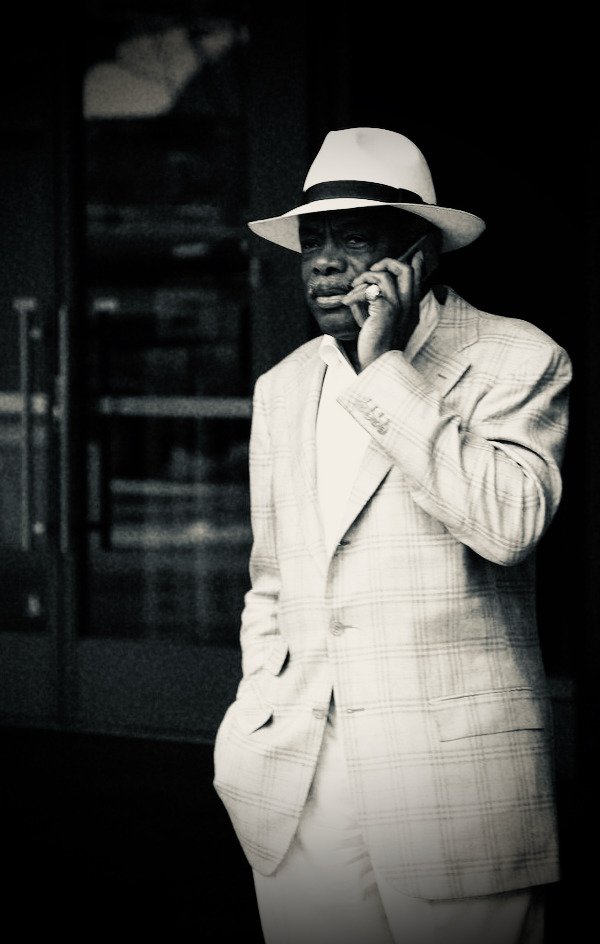
One man, though, who has been a successful politician for decades and whose style we’ve always admired is San Francisco’s Willie Brown.

Thirteen years after he resigned as Speaker of the California State Assembly — an office he held for an unprecedented 15 years — and more than four years after his tenure as San Francisco’s mayor ended, Willie Brown remains one of the most powerful men in California politics. He is also one of the world’s best dressed men.

A Texas native, Brown came west, arrived in San Francisco in 1951, age 17. He was met at the station by a dapper uncle, he relates in his new memoir, “Basic Brown: My Life and Our Times,” who took one look at the country-dressed youngster and immediately took him shopping. Brown’s been a clothes-wearing man ever since.

Brown’s politics, like those of his predecessors is built on “juice” — that most dandyish form of soft power that works entirely through personality, influence and connections and operates at the highest levels of society. And Brown is nothing if not a social butterfly. Though now in his 70s, rare is the evening when he doesn’t have two or three high-toned engagements lined up, and he still spends his Friday afternoons at the window table at Le Central, talking, drinking and playing dice with socialites like Harry de Wildt and his long-time haberdasher, Wilkes Bashford.

Partly through his old friend, the late Herb Caen — who dubbed him “Da Mayor” and called him “Hizzoner” — and partly through his own charisma, Brown developed a relationship with the press that was the envy of his political colleagues and the scourge of his rivals.

“The only thing worse than being misquoted,” he once said, channeling Oscar Wilde, “is not being quoted at all.” (more…)

Social Vs. Literary Dandyism

frontis01_full.jpgThe split between the dandyism of clothes and the dandyism of words is the subject of our most recent Library addition: “Social and Literary Dandyism,” published in Littell’s Living Age in 1880.

In its rambling way, Littell’s unsigned article compares the purely social dandy — the Beau Brummells and Poodle Bings — with his literary counterpart.

“Dandies, like saints, are never much beloved of their fellow-creatures,” states the anonymous author. “Like saints, they have an ideal perfection in manner and dress, and ideals are felt to be impertinent. To be a dandy is to outrage the vanity of every one who has not the energy to be wakefully attentive to details of deportment and costume. The great dandies of old says, like Brummell, Lauzun, and the rest, were everywhere welcomed because they made themselves disagreeable to so many people.”

The author goes on to say, “A young man is never more certain of social success than at the moment when most other young men never mention him without saying that they ‘would like to kick him’.”

But as goes social life, so goes its literary counterpart. “Literary dandyism is also excessively annoying to the rugged hodmen of letters,” notes the author. “These industrious persons detest the literary dandy, the man who minds his periods and regards the cadence of his sentences, and shuns stock illustrations and old quotations, as the social dandy avoids dirty gloves and clumsy boots.”

The anonymous author names several men whom he considers literary dandies, including Balzac, Arnold, Pater, Walpole, Sydney, and even Machiavelli and Plato himself. Yet he was more prescient that he could ever have imagined. Just a few years after the publication of “Social and Literary Dandyism,” Oscar Wilde would burst onto the scene, first as an international lecturer on aestheticism and eventually as the author of some of the English language’s most elegant comedies of manners.

Many years later, a young journalist named Tom Wolfe — a man who donned his white suits, he said, for the express purpose that they pissed off “industrious persons” — would help reinvent literary non-fiction. Both were roundly kicked by the inelegant hearties of the prose world in their respective day. Yet both show that dandyism, whether personal, social or literary, involves clever balance of artifice and being true to oneself.

Life’s Not Fair

greg.jpgPerhaps the most famous of all dandy admonishments is Brummell’s simple warning, “If John Bull turns to look after you, you are not well dressed, but either too stiff, too tight, or too fashionable.”

Later worthies echo the Beau’s sentiment. “Never in your dress altogether desert that taste which is general,” is one of Pelham’s maxims in Bulwer-Lytton’s novel. “The world considers eccentricity in great things, genius; in small things, folly.”

And in his essay “Dandies and Dandies,” Max Beerbohm writes, “Is it not to Brummell’s fine scorn of accessories that we may trace that first aim of modern dandyism, the production of the supreme effect through means the least extravagant?”

So it was with great amusement not long ago that I came upon an old acquaintance who recounted an anecdote that perfectly illustrates these long-held dandy ideals.

Carlos is a fine young man of conservative style, prone to academic-looking corduroy jackets, who had recently interned at my company before moving on to a nonprofit organization. I asked how his new gig was going. “It’s the most ‘San Francisco’ place I’ve ever worked,” he said enthusiastically.

“In what way?” I asked.

“The place us full of eccentrics,” he explained. “Real San Francisco-style originals. There’s even a guy who dresses like he’s on his way to the Dickens Fair.”

“Really?” I said, arching an eyebrow. “What’s his name?”

Gregory Seeley.”

And so I offer a new twist on an old maxim: “If Carlos turns to ask if you are on your way to the Dickens Fair, you are either too retro, too eccentric, or both.”

(Mr. Seeley is pictured at left at a company picnic.)

The Fake’s Progress

horsley.jpgEvery era gets the dandies it deserves.

The Regency got Brummell, a true sartorial innovator whose wit was as crisp as his country-washed linen. Count D’Orsay alleviated Victorian stuffiness with his manly charm, and the Edwardian Era was graced by Saki and Max Beerbohm, who all but reinvented the rapier wit. The Deco era had thoroughly modern Noel Coward, Lucius Beebe appeased Atomic Age anxiety with quaint anachronism as well as a poisoned pen, and the big-money ’80s saw the rise of another dandy satirist, Tom Wolfe.

Though they had different personalities and temperaments, these great dandies all shared certain qualities, including style, wit, aplomb and often a mild eccentricity. Many also enjoyed some measure of celebrity — how should we have known them otherwise? And while some dandies of the past certainly enjoyed their fame, the artists among them put their work first and did not pursue celebrity for its own sake. “L’homme est rien,” said Flaubert. “L’oeuvre est tout.”

But who in our present era is celebrated for his dandyism? When the words “dandy” and “dandyism” appear in print, what names are written in conjunction with them? Who, in the eyes of the media and public, are the successors of Brummell, D’Orsay and Beerbohm?

In a 2006 article, The Guardian attempted to answer these very questions. Published in light of Ian Kelly’s Brummell biography and the BBC miniseries “This Charming Man,” the article cites as Brummell’s successors, among others, two pop stars: Brian Ferry, a self-proclaimed “pimpernel” who, the author gushes, “now wears Prada, Hedi Slimane and Kilgour,” and Sean “P. Diddy” Combs, whose “ghetto fabulous” look consists of “jeans and $10,000 worth of jewelry around his neck.”

Others recently celebrated as dandies in the press include Combs’ former umbrella-carrier-in-chief, Fonzworth Bentley (real name Derek Watkins), OutKast frontman André 3000 (real name Benjamin) — whose tailored Duke of Windsor/Harlem Renaissance-inspired duds have lately given way to outfits more conducive to farming than strolling boulevards — British rock star Pete Doherty, who dresses like an Amish notary, and Patrick McDonald, whose penchant for cosmetics at times makes him look like Liza Minelli.

(more…)

The Autocrat of the Three-Martini Lunch

as.jpgBon vivantism, if that is indeed a legitimate phrase, is a characteristic — or, if you prefer, a malady — particularly evident in great historians and men of letters. From Ben Franklin and Emile Zola to Winston Churchill and Bernard DeVoto — whose book “The Hour” is perhaps the most elegant paean to cocktail time ever written — men of letters have proved inveterate noontime party boys who like to live well and live big, indulging appetites in comestibles and potables, concepts and conversation with equal gusto. These are men who know how to linger over a glass but also over a thought, pulling the last drops of pleasure and enlightenment from both.

Arthur Schlesinger, the historian and author of some 20 books who died February 28 at the age of 89, was one such titan of the pen and the palate.

Invariably the obits describe Schlesinger as a liberal Democratic partisan, an apparatchik even, whose writings “The Age of Roosevelt” and “A Thousand Days” gave the foibles and follies of his patrons in Roosevelt and Kennedy administrations a free pass. Yet Schlesinger was also a steadfast anti-communist who condemned the callow radicals of the ’60s and the race-baiting zealots of identity politics in the ’70s with as much fervor as he did the McCarthyites of the 1950s. His book “The Vital Center” is an appeal for reason and balance in government. (more…)

The Very Model of a Modern Major Minor

copy-of-osbert2_0002.jpgYou may have never heard of Osbert Lancaster. He is one of those minor dandies who achieved a quiet perfection in his everyday life, though never rose to legendary status.

No, Lancaster simply dressed carefully, offered wry commentary on the world through his writing and illustrations, and lived a leisurely and mildly sybaritic life. Few men may rise to the rank of a D’Orsay or Duke of Windsor — fewer still may wish to — but Lancaster is someone that every man forced to labor for a living can admire.

“Osbert Lancaster stands among the most prominent of the minor dandies,” writes Michael Mattis in a survey of Lancaster’s life. “These are men who, through dint of superb personal style, effervescent social skills and, in some cases, a little artistic or literary talent, get noticed, but who cannot be said to stand among the highest in the dandy hierarchy.”

Though Lancaster — rather like us — never had need to refer to himself as a dandy, other people did. And now, thanks to Mattis’ discovery, many will continue to.

(more…)