Categories

Late In His Loafers

Last week Nathaniel Adams hosted a soireé in New York in which various members of Dandyland, including folks from the Rhode Island School of Design’s new dandy exhibit, read from classic dandy literature and mingled over free cocktails.

We sent Chenners, asking him to take photos and report on the event.

After numerous inquiries, the D.net founder finally responded via email this afternoon with the photo above and his “report,” which consists of the caption, “My left foot.”

Other sources have confirmed that a fun time was indeed had by all.

Grey Poupon: The Lost Footage

American readers of a certain age will remember the old TV commercial for Grey Poupon, a Dijon mustard now made by food-biz megalith, Kraft. (“So fine, it’s even made with white wine.” Fancy that!) In it, one chauffeured Rolls Royce pulls alongside another. The well dressed man in one leans out and asks the impeccable man in the other, “Pardon me, but would you happen to have any Grey Poupon?” The original ad aired in the 1980s.

Fast forward to 2013, when all things vintage — and faux vintage — are in style, from the new-to-retro Fiat 500 to Banana Republic’s “Mad Men” apparel collection. And Kraft and its agency CP+B have seized the day, back-filling the original with clever CG and new footage that tells the story of what happened after the first encounter, Bond-style.

Enjoy.

GQ on Beau Brummell: It Just Doesn’t Suit

When it comes to turning to Beau Brummell for inspiration, even people in the men’s fashion world get it wrong from time to time—and more often.

Popular misconceptions include:

  • Beau Brummell invented the tuxedo (or at least black-and-white for men’s evening wear)
  • That he employed several glove makers to make each pair of gloves
  • That the Prince Regent broke with Brummell over the impertinent demand, “Wales, ring the bell!” during one of their late-night piss-ups. (Brummell denied this episode repeatedly while en Caen.)

Over time these legends and others have taken on a life of their own, in part because Brummell’s wit tended toward the exaggeration of trifles. He liked to mess with people’s heads.

Still, we were not quite aghast to read this piece on the website of GQ, that venerable organ of manly style formerly known as Gentleman’s Quarterly. We were, however, nonplussed.

It starts out all right:

“Every time baggy, pleated, and yet somehow tightly tapered pants come back in style, there’s a chance that cuff might creep up the calf inching our fashion standards back to the time when men wore tights and breeches and everyone had the plague… To know how we have have arrived at our current sartorial epoch — and why we must defend it — we need first understand how we broke from the ‘ballet look’ in the first place. And for that, we have one man to thank: Beau Brummel.”

True enough for those who care to “defend” such things, except for the repeated spelling of Brummell’s name as “Brummel.” We can’t fault the author, Micah Fitzerman-Blue, overmuch for this, however. The original French editions, as well as some English translations, of Jules-Amédée Barbey d’Aurevilly’s “Du Dandysme et de Georges Brummel” spell the man’s surname with only one “L.” It’s an easy mistake.

But then Fitzerman-Blue goes on to describe Brummell’s father as an “upper middle-class politician.” He wasn’t. William Brummell was in fact a bureaucrat, the private secretary to Lord North, Prime Minister of England from 1770 to 1782. Bill Brummell never held elective office.

Then there’s this:

“Between preening, plucking, polishing his boots with champagne (fact), and spending upwards of £800 a year (over $120,000 today) on tailoring, Brummel solidified his relationship with the Prince, and established his status as London’s style icon.” [Emphasis ours.]

No, not fact. As Nigel Rodgers points out in his soon-to-be-released book, “The Dandy: Peacock or Enigma” (of which more anon), “… the story that he used champagne as boot blacking is clearly a Brummell joke—champagne is sticky.” [Emphasis Rodgers'.] Anyone who has ever bungled an inebriated toast at a wedding should know this, and the apocryphal nature of this story has been pointed out in several previous works.

Finally, there’s the kicker:

“All that fuss actually resulted in something decidedly unfussy: full-leg trousers with matching jacket, a white linen shirt, and an ascot. In other words, a suit.”

We have a few other words. Brummell didn’t invent the suit any more than he invented the tuxedo. In fact, men had been wearing suits—coat, vest and some form of leg wear (usually breeches) of one matching fabric or another—for more than a century prior. Brummell never wore one. His day costume consisted of a blue coat, white or buff colored vest, fitted buff trousers and Hessian boots. For evening, he wore a blue coat and black trousers that closed tightly around the ankle. Brummell never used the word “ascot” unless to identify the town of that name in Berkshire or the horse races that have been taking place there for some three centuries now. Brummell wore—and wore exquisitely—a cravat. The ascot tie did not appear until several decades later.

In his biography, Ian Kelly quotes Brummell as saying, “I, Brummell, put the modern man into pants, dark coat, white shirt and clean linen.” In that sense, Brummell is the progenitor of modern men’s dress, but that’s hardly the same as saying that he came up with the suit as we know it today.

We should note that Fitzerman-Blue is not a staff writer for GQ but works for a commercial outfit called Bureau of Trade. Its mission is “finding, curating, and selling quality goods, while educating guys on what it is they’re actually buying…” (In this case, a Tom Ford Black Fleece suit.) Here’s to “finding, curating and selling.” Now if Bureau of Trade would only get the education part right—or maybe GQ should hire Esky to do a little fact checking.

News and Notes: The Bowler, a Dandy Talk, and Celebrating Ivy Style

It’s been a while since we lasted posted. Your correspondents have been busy, mostly answering the dolorous call of that cruelest of pagan idols, Mammon. Such is the frenzy of the modern world. But we do have news of a dandiacal nature to impart to our faithful myrmidons around the globe.

First up, D.net founder and Ivy-Style.com impresario, Christian Chensvold, has re-invigorated the pages of The Huffington Post with a new style column. Last week, Chensvold posted a piece headlined “Old Hat: Broker’s Gin and the Fate of the Bowler.” It’s a charming column for a number of reasons. Written in the inimitable Chenners Deadpan Style™ one is hard pressed to know whether he’s serious or having us on for a lark. (We suspect a little of both.) The hook, which is that Broker’s Gin—capped with miniature bowler hat—is currently the fastest selling gin in U.S., dovetails nicely with a chat about the fate of said headgear in the contemporary world.  Your correspondent was honored to be gently pilloried for recently having bought and even occasionally wearing a Christy’s bowler (or derby or coke if you prefer) on the town and for special occasions.

Next, our friend, that redoubtable dandizette, Rose Callahan of The Dandy Portraits fame will be offering her unique photographic perspective at Dandy Talk, a seminar to be held October 5, 2012 at the elegant National Arts Club in New York City. She’ll be joined by Matt Fox of the Fine and Dandy Shop, manners expert Thomas P. Farley and Nathaniel Adams, a writer and the manager of Against Nature Atelier. Admission is free but be sure to RSVP. Nonplussed by idle dandy chatter? Never mind, the event is sponsored by Hendrick’s Gin, which will be providing cocktails.

And finally, if you haven’t seen it already seen it, the Ivy Style exhibit at the Fashion Institute of Technology opened in New York City on September 14. It explores the golden decades of upper-crust, Ivy League college style—that conspicuously casual and uniquely American form of dandyism. If the name sounds familiar, it’s because ol’ Chenners, noted above, is heavily involved in it. Also on the hook for the history notes is Richard Press (of J. Press fame), curator Patricia Mears, Christopher Breward, Masafumi Monden and others. Click over to Ivy-Style.com for more details and updates. The exhibit runs through January 5.

Can’t make it to the Big Apple? Watch the video embedded below…

…or buy the book.

Gilded Age: 71-Year-Old Olympian Hiroshi Hoketsu

The gold medal for dandyism at the 3oth Olympiad goes to Japanese dressage rider Hiroshi Hoketsu, who at 71 is the oldest athlete in the London Olympics and rides with the cold aplomb of an archetypal English gentleman.

Wild Dandyish Rose: Six Questions for Rose Callahan

Hugo Jacomet of Parisian Gentleman, Paris. Courtesy, Ross Callahan.

Rose Callahan is notable for, among other things, her work in creating The Dandy Portraits, in which she catalogs the “lives of exquisite gentlemen today”—contemporary dandies and modern retro-eccentrics alike. Ms. Callahan’s commitment to outstanding men’s style, as well as her eye for detail and superior photography, prompted Dandyism.net to get in touch with her and ask a few questions.

Ms. Callahan is a native of San Francisco—an increasingly rare thing nowadays. She studied photography at the venerable California College of the Arts, founded in 1907 by Frederick Meyer, one of the lodestars of the California Arts and Crafts movement. Ms. Callahan shares a legacy with such West Coast luminaries of aestheticism as Gillette Burgess (founder of The Lark), Willis Polk and Bruce Porter. It’s no wonder she has such an acute sense of the minute details of her craft, or that she was called “the most amazing woman on the planet” by the authors the Fine and Dandy Shop’s weblog.

Ms. Callahan tells us she was inspired to take up photography at an early age by her mother, who was passionate about the art. Her early heroes included Man Ray, Brassai, George Hurrell, Robert Frank, Bruce Davidson, Helen Levitt, Diane Arbus, Mary Ellen Mark and Hollywood glamor portraits.

As a freelance photographer, Ms. Callahan shoots portraits and fashion plates for clients such as Grey, McCann-Eriksson, Scholastic, Random House, the Gilt Groupe and so forth. Recently she has been creating short films at her own Rarebit Productions, focusing on her favorite subject, the exquisite gentleman. She is currently collaborating with journalist Nathaniel Adams on a book proposal for The Dandy Portraits. She now lives in New York City.

Winston Chesterfield of Le Vrai Winston,  London. Courtesy Rose Callahan.

Michael Mattis: When did you first hear the word “dandyism?” How did you react to it?

Rose Callahan: I don’t ever recall not knowing the word, but my understanding of it must have come from watching reruns of BBC shows on public TV.  It was usually in context of “he’s a bit of a dandy,” meaning or insinuating somewhat of an eccentric English gentlemen, but with a rakish quality, and of course, a sharp dresser. The Kink’s song “Dandy” was definitely also part of my awareness of the term.

(more…)

Who’s the Dandy?: Oscars Edition

You can’t watch the Academy awards. Not in person, in any case, unless you’re a seat-filler. It’s by invitation only, to Academy members, and the Academy determines the guest list. So how do you get to be a member of the Academy of Motion Picture Arts and Sciences? Why, your name is endorsed by your Academy branch’s executive committee, then you are sponsored by two existing Academy members, and membership is by invitation of the Board of Governors. So when it seems like the judging criterion is a bit biased, that’s because it is, thank you very much. And if you don’t like it, well, we’ll just pass you over for membership this year.

But they do throw a heck of an awards show. Actually, they throw four, but only one is televised; because who wants to see overweight, balding technicians get Oscars for Science and Technology?

The Oscars is supposed to be a classically formal affair. Dinner dress has been the norm, but full dress has not been unheard of. (On the Awards Parade Formality Continuum, the Academy Awards fits in somewhere between the snooty Tonys and the extravagant Golden Globes.) Before we go further, let’s set the bar high with Kirk Douglas at the Oscars in 1950. That’s how it’s done.

No one opted for dress suits at this year’s Oscars. Well, host Billy Crystal tried. (No, Zach Galifianakis and Will Farrell, presenters in all-white dress suits and cymbals, don’t count.) Billy Crystal’s suit was just awful. The jacket was cut well enough, but everything under it was four shades of wrong. White tie is an exacting mistress who will not tolerate tepid commitment. Crystal could tell something was wrong, too; he seemed uncertain and ill at ease wearing it. It seemed as if the clothes themselves shamed him into dressing down into a less-distracting dinner suit for the second half of the show. That’s too bad, really; Crystal’s age and gravitas have grown him into the role of Oscars host, one who should be able to confidently wear proper white tie. The brash young outsider joking his way through the show has matured into a latter-day Bob Hope, who gives the Oscars the self-deprication it so desperately needs to be accessible to Joe America, and keep it from sinking into a self-congratulatory event for Hollywood insiders who take themselves far too seriously.

(more…)

Who’s the Dandy?: Super Bowl Edition

Last Sunday, February 5, the people of the United States over-indulged in their annual ritual of rough spectacle, the Super Bowl. American football, which somehow split from its English parent, Rugby Football, in the 19th century, has become the American institution nonpareil, as much a religion as a sport. As a game, it combines brute force, military-style battlefield strategy and, occasionally, physical poetry.

But the Super Bowl is more than the ultimate season-ending championship game. It’s America’s “barbaric yawp,” an over-the-top, overtly commercial, Roman-style imperial pageant (as Madonna’s show at half-time more than casually suggested).

Even those Americans who don’t like football watch the Super Bowl. Why? The commercials. Since Apple’s famed “1984” spot first burst onto the scene during Super Bowl XVII, the game has been used as a canvas one which the world’s top advertising agencies and brands show off their finest “art.”

Among this year’s Super Bowl ads was this one from Gillette, maker of shaving apparatus.

The ad, called “Masters of Style” features:

Adrien Brody, the Hollywood man about town and star of the triple Oscar award-winning film, The Pianist.”

Gael García Bernal, steamy Latin lover and lead in such romantic comedies as “A Little Bit of Heaven.”

André 3000, singer-songwriter, member of the hip-hop duo “OutKast,” and creator of the “Benjamin Bixby” line of 1930s, college-inspired clothing.  (You’ve seen him here before.)

Well, what about it? Who’s the Super Bowl dandy? One? None? All? Or should there be a flag on this play? Let us know in the comments.

It’s Official: Dandyism.net Founder is Big in Japan

Dandyism.net founder and erstwhile editor-in-chief, Christian “Chenners” Chensvold has cracked the code that lies at the four-point crossroads of contemporary dandyism, trad, preppy and Ivy League style—in Japan. He was recently profiled in the Japanese magazine, Free & Easy.In 2008, Chensvold founded Ivy-Style.com, a website devoted to the Ivy League look, its history and its place in American—and, indeed, international—culture. Two years ago, Chensvold pulled up his California stakes and moved his operation to New York, to be nearer the epicenters of publishing, culture and style. There he met classic men’s style greats like G. Bruce Boyer and Richard Press. And Ivy-Style.com thrived. Recently, he was appointed an editorship at the venerable New York high society magazine, Quest.

(more…)

Balzac’s Treatise on Elegant Living

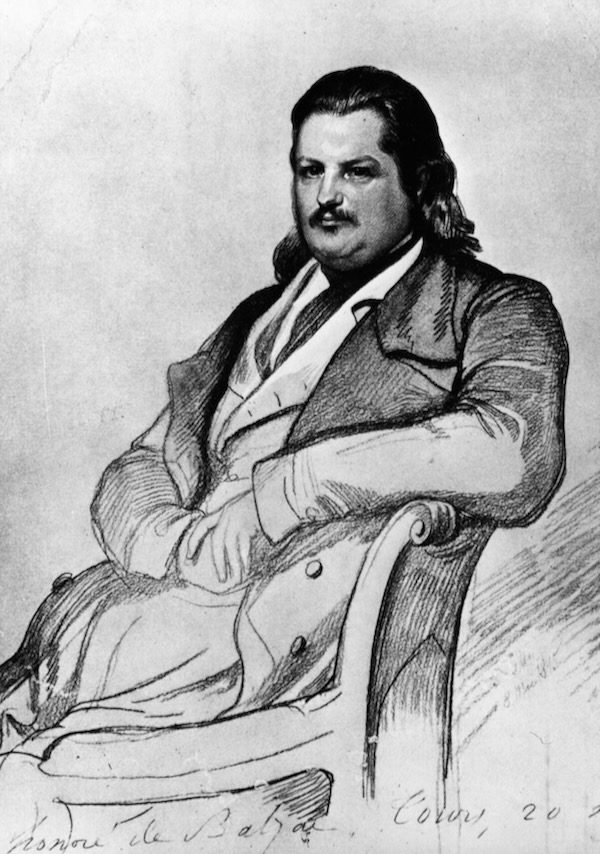
Balzac’s “Treatise on Elegant Living” was recently given its first English translation by the newly founded Wakefield Press. I wrote this essay on it for the latest issue of The Rake.

Lessons in Elegance: The words of wisdom contained within Honoré de Balzac’s “Treatise on Elegant Living” remain pertinent almost two centuries after their initial publication
By Christian Chensvold
The Rake, issue 10

Every era has its particular expression of elegance. But while that expression is forever in flux, the principles that govern it are fixed and eternal. So argues Honoré de Balzac in his “Treatise on Elegant Living,” a breezy philosophic tome written in 1830 recently given its first English translation by Wakefield Press, a small new publisher in Cambridge, Massachusetts devoted to rare and forgotten works of European literature.

The “Treatise on Elegant Living” brims with timeless aphorisms that transcend the ever-changing guise of fashion. Take, for example, the following evergreen gem: “Good has but one style; evil a thousand.” For Balzac, a few of the thousandfold manifestations of sartorial evil include any outfit that bears excessive ornamentation or a profusion of colors. Then there’s what in the fashion industry is called “working a look,” an act of folly whose sin is meretriciousness. “Anything that aims at an effect,” pronounces Balzac, “is in bad taste.”

(more…)

Dandy in the Otherworld: In Memory of Sebastian Horsley

Michael Mattis, who has previously written about Sebastian Horsley for Dandyism.net, offers this remembrance.

Dealing with death is always a hard thing. Dealing with the death of someone you have written about is harder still — especially when what you have written about the deceased is not all that nice.

Frequent readers of Dandyism.net will be well within their rights to expect us to slam Sebastian Horsley even in death. But they will be disappointed. For one thing, it does not fall within the purview of a gentleman to speak ill of the dead. What follows is, rather, a grudging appreciation.

First, the facts: According to news reports, the body of Sebastian Horsley, 47 —artist, writer entrepreneur and showman — was found at about 11:00 A.M. GMT on Thursday, June 17, in his small apartment in Soho, London, by one of his lady friends. He had apparently died of an overdose of heroin.

A few evenings before, Horsley had seen the play about his recalcitrant life, based on his memoir, “Dandy in the Underworld.” The play was written by Tim Fountain. It was to be made into a film, produced by his friend, the actor, writer and director Stephen Fry of “Wilde” and “Jeeves” fame.

(more…)

Laurence Fellows: Master of Menswear Illustration

spring342fx1.jpgIn the spring of 1934, a gentleman with a neatly trimmed mustache casts an eye in the direction of the door to an office waiting room, temporarily distracting him from the copy of Esquire he’s just picked up. Is he waiting for a stockbroker? A dentist? A divorce lawyer?

We can tell he’s a man of means and sophistication from his outfit. He’s sporting a lightweight double-breasted suit in a strong check pattern. His blue shirt has a starched white collar and cuffs, and his Guards tie is finished with a four-in-hand knot. His blue pocket square is a few shades paler than his shirt, and matches his socks. His shoes are brown cap-toe balmorals. A gray homburg and rattan cane have been casually placed on an adjoining chair.

Wearing a checked suit in town is something nearly unheard of, but this man pulls it off smashingly. We know he’s confident in his clothes and his world—because the world he inhabits is the creation of an artist who signs himself L. Fellows. And you can be sure that in the months after this illustration appeared, far more checked double-breasted suits were seen on city sidewalks.

If you’ve ever cracked open an old Apparel Arts magazine or vintage Esquire from the ’30s to the ’50s, you’ve seen the distinctive fashion art of Laurence Fellows. But who was this Fellows fellow, anyway?

Fellows was born in Ardmore, Pennsylvania in 1885. He was trained in illustration at the Pennsylvania Academy of Art, and honed his trademark “continental” style studying in England and France. But the real story begins when he returned to the States in the early 1910s and burst on the scene as an eager and talented young artist.

Fellows found work contributing to satirical magazines like Life and Leslie’s, and his European-influenced style was fresh and new, reflecting the sleekness and stylization that led to Art Deco. His work was so fresh, in fact, that he found many of his better-known contemporaries, including John Held, Jr. and Ralph Barton, were adapting his stylistic elements for their own use.

Fellows’ style during this period was very mannered and graphic, with thin black outlines enclosing flat expanses of tone and compositions that emphasized graphic weight and balance over fussy illustrative detail. His bread and butter throughout the 1920s was his work for the Kelly-Springfield Tire company. He brought an idea to the Kelly advertising manager for a series of magazine ads featuring “smart cars and smart types of people.” It was the beginning of an assignment that lasted for nearly a decade. The ads are still smart and fashionable today (and becoming collectible, by the way). (more…)

Who’s the Dandy? — Gatsby Edition

wtd-6.jpg

Yesterday was the 25th annual Gatsby Summer Afternoon in the San Francisco Bay Area. The many duded-up gents give us the chance to revisit our “Who’s the Dandy?” series with our first-ever costume edition. Leave a comment to cast your vote on your favorite outfit. Above are John Akridge and Benny Reese. Below, Slimm Buick: (more…)

Elegance Made Casual: The Enduring Style of Fred Astaire

astaire-1.jpg“The Passionate Spectator” columnist Robert Sacheli previously delivered a lengthy appreciation on Fred Astaire. Here, inspired by a new biography on the style icon, he takes a curtain call.

Despite the best intentions of our Founding Fathers, Americans have long been crazy for aristocrats — particularly when it comes to emulating their style. In the 1930s, fashionable men looked to a pair of princes for their cues. One, the Prince of Wales, aka the Duke of Windsor, was a bona fide blueblood, and the influence of his Fair Isle sweaters, midnight-blue dinner jackets, and country-house suits was reflected in the gentlemanly swank of Esquire’s fashion illustrations and in the haberdasheries that catered to the well heeled.

When he foxtrotted off with that divorcée from Baltimore, the dapper Prince abdicated more than an imperial throne. He passed the title of ranking monarch of male fashion to a royal from another powerful, if slightly more mythical, land: Hollywood. Fred Astaire’s reign would prove to be a long one, and his enduring imprint on American style is a legacy as remarkable as his films.

While most of us have happily been content to sit back and watch the man dance, Astaire has long been a magnet for cultural historians, and Joseph Epstein, former editor of The American Scholar, stepped up for his turn on the floor last year with his brief biography, “Fred Astaire” (Yale University Press). The book wasn’t exactly rapturously received (the New York Observer pronounced it “intellectual slumming” and “priggish”), and an extended excerpt in the Hudson Review shows that the carping is justified.

In it, Epstein comes off as alternately snarky, sour, and worst, clueless about musicals — as expected for a highbrow whose works include a volume called “Snobbery.” He’s also not been done any favors by his copy editor. Among other gaffes, he manages to misspell the name of one of Fred’s frequent co-stars, Helen Broderick, and refer to Van Nest Polglase, RKO’s master of the 1930s Big White Set, as an exemplar of Art Nouveau and mangle his name as well. Epstein’s biggest head-scratcher, though, is his assertion that for all the pure joy that Astaire radiated to generations of audiences, he falls short of being a genius. Instead he’s an undeniably talented, perfection-obsessed, but basically dull fellow who can somehow dance up a storm. As Miss Broderick might dryly retort with an appropriate eye roll, “Oh, yeah?” (more…)

People Are Strange: Chensvold on Eccentrics

vogue-11.jpgLast month my editor at L’Uomo Vogue emailed me with the subject heading “Urgente!” She asked me to write the introductory essay for the upcoming issue, whose theme was “eccentricity.” She needed 800 words, and I could take any approach I wanted. The deadline was 24 hours.

I figured every Italian writer on their roster must have been on a six-week summer vacation if they were forced to resort to me at the last minute. Still, I felt honored.

Well the issue is out and my piece isn’t exactly the intro to the issue: Instead, they made in the back-page essay and slapped the word “Opinion” over it. Well, it certainly is.

But hey, there are 350 pages, and I’ve got the last word.

Below is the English original. It’s less musical than the Italian translation, but at least there are paragraph breaks.

Everyone/No One Is Eccentric
By Christian Chensvold

I once met a fashion writer who was dressed in red pants, pointed shoes and a kind of military jacket that looked straight from the cover of the Beatles’s “Sgt. Pepper’s Lonely Hearts Club Band.” But most noticeable about him was his waxed handlebar mustache.

He was about 25.

During our conversation, the young man repeatedly used the word “eccentric,” but not to describe someone who sleeps hanging upside down like a vampire bat because they find it more effective than Ambien, but to refer to certain acquaintances and their fashion sense, which was carefully calculated to look outlandish.

“Eccentric” is one of those words that in common usage has lost nearly all its denotative meaning. It has also shed its more quaint and rarified connotations. “He’s a bit of an eccentric,” used to suggest the person referred to was erudite and rich in addition to slightly odd. An innocent victim of our era of subjectivity and relativism, “eccentric” now means whatever the speaker wants it to mean, ceaselessly shifting based on context. And increasingly “eccentric” has come to mean just another lifestyle choice.

Decades of global democracy, mass media saturation and egalitarian ideologies have all contributed to the dilution of the concept of eccentricity, a moniker so charming when used to refer to an English aristocrat, yet so pathetic when applied to a suburban Californian trying to live out the fantasy that he’s a pirate.

The true definition of an eccentric, of course, is not just one who behaves oddly, but one for whom it would never occur to behave otherwise. In its purest form, eccentricity is wholly unconscious. But as soon as “eccentric” behavior becomes a kind of deliberate performance used for self-promotion and publicity, or for gaining attention, whether positive or negative, we are not dealing with genuine eccentricity, but something ersatz. Instead of being delightfully oblivious to his own oddities, the “eccentric” is a calculating showman seeking a reaction from his audience. If the true eccentric is a private individual who hides his idiosyncrasies, the ersatz eccentric is a public poser who flaunts them. (more…)