D.net Wins Fabbies

magritte-son-of-man.jpgFashion blogs are the stepchildren of the blogosphere, always overlooked when awards are handed out. Even worse, men’s fashion is the stepchild of the fashion world, ignored in favor of women’s fashions.

So that makes Dandyism.net, which has won the inaugural Fabbie Award for Best Men’s Fashion Blog, a real bastard of the blogosphere.

Yes, D.net now shares accolades with Afrobella, which won for Best Beauty Blog, and Honest Baby, which won in the Parents/Pets category, at the Fabbies.

If you think we’ve been insufferable in the past, you ain’t seen nothin’ yet. We’ve always been charmless, but now we’re officially entitled.

Despite our cold superiority, not to mention indifference to fashion, we’re not quite sure what we did to deserve this distinction. Then again, we did manage to beat out the likes of The Materialist, which hasn’t posted any content since February, a couple of blogs that aren’t even in English, and Lord Whimsy’s sarong.

And so while we thank all you faithful myrmidons who took the time to cast your vote and surrender your e-mail address to a marketing machine, we cannot help but feel akin to having just beaten Robert de Montesquiou in the World’s Strongest Man competition.

Digg this story Add to Del.icio.us Add to Reddit Netscape

Ghost Writer: Lucius Beebe 3/3

bebe.jpgHerein follows the final chapter of Robert Sacheli’s biography of Lucius Beebe, which depicts the subject in his final years haunting the modern world like an elegant phantasm.

Sunset in San Francisco

The television show “Bonanza,” set in Virginia City, was a gold mine for the town, but this fictional version of old Nevada was at odds with Beebe’s more rarified vision, and in 1960 he and Charles Clegg decamped for San Francisco. The column “This Wild West” became his bully pulpit at the San Francisco Chronicle, and he continued to write for the glossy magazines that guided aspirants in the art of finer living, such as Gourmet, Holiday, and Town & Country.

Beebe’s work of this period still reflects his wit, enthusiasms and indulgences, but the charm could now sometimes curdle and the nostalgia grow overbearing. Still renowned as the nation’s foremost “eatall and tosspot,” Beebe roamed the globe and reported on fabled restaurants, but his articles blur into an over-rich banquet of le hommard Deauvillaise, poularde sautee au Champagne, croustarde de langouste, and soufflé Grand Marnier, washed down with Chateau Margaux ‘34 and topped off with snifters of Hine cognac and a Cuban belicoso fino. Who, in the early 1960s, was dining like this?

Continue »

Digg this story Add to Del.icio.us Add to Reddit Netscape

Steppin’ Out With My Beebe: Luscious Lucius Part Two

beebe-oval-2.jpeg

Here follows part two of Robert Sacheli’s resuscitation of the forgotten American dandy Lucius Beebe, in which the author pays particular attention to Beebe’s sartorial splendor and his place as the first retro-eccentric of modern dandyism.

Dressing for the role of official czar of Nightclubland came naturally to Lucius Beebe, as he’d been rehearsing for it all his life.

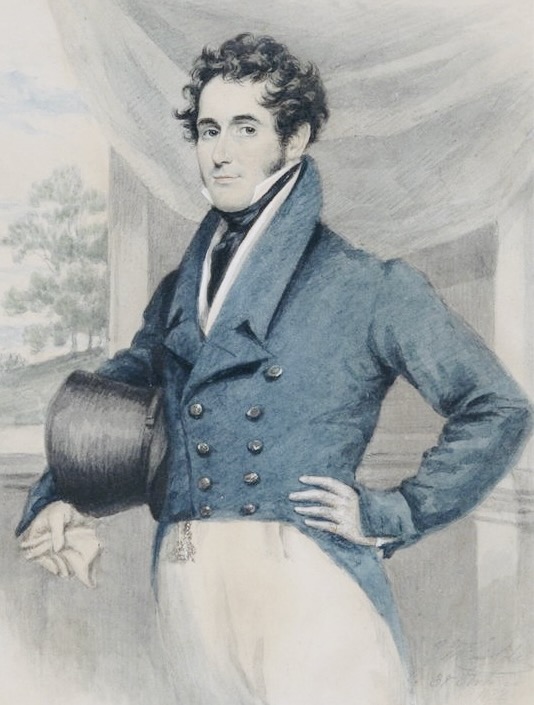
Beebe was reportedly the first man to introduce white linen plus-fours to Yale (Gibbs reported that “Professor Chauncey P. Tinker, seeing them at a distance, complained irritably that the place was getting overrun with women. ‘Don’t look now,’ he said, ‘but here come two of them now.’”) He got better reviews from his fellow students. The campus paper enthused over his “orchidaceous grey trousers” and “vine-covered top-hat.”

In London, Beebe ordered his suits from Savile Row’s Henry Poole & Company, and he looked on being measured for a bespoke suit as something akin to taking the sacrament. The venerable gentleman’s tailor was “not only a cathedral of waistcoats and hunting pinks, [but] a repository of Victorian grandeurs establishing continuity with the past and the great names of English legend.” Throughout his life, his business suits from Poole duplicated the lines of one made for him in New York in the early ’20s, which were, he says, “cut from doomsday fabrics, with notched lapels and four buttons.” The suits were only one component of the grand effect. The New Yorker helpfully provided its readers with a partial inventory of Beebe’s dressing room:

He has a good evening dress coat lined with mink and collared in astrakhan, which he has insured for $3,000, and an old rag also lined in mink, but with a sable collar, which didn’t seem worth the bother. The jewels necessary to set off this splendor, or else hold it together, include three gold cigarette cases (although he rarely smokes anything but cigars), valued at $700 each [in 1937 dollars], a cashmere sapphire cabochon ring worth $1,200, a single emerald stud at $500, and a platinum evening watch which cost $10,000.

Continue »

Digg this story Add to Del.icio.us Add to Reddit Netscape

Yes Sir, That’s Our Beebe

beebe-1.jpgWhen Dandyism.net launched four years ago, we stated as our mission the desire to rescue the dandy from the slag heap of history through rigorous scholarship and unflinching self-righteousness.

Now it is time to rescue one particular dandy: Lucius Beebe, an all-but-forgotten American original who barely warrants a mention by the academics of dandyism, who are more concerned with muddled abstractions like “performance” and “self-invention” than the tangible plumage of top hat and tails.

To Beebe, this plumage was essential as it was to Fred Astaire. In donning it, Beebe simultaneously defined himself, an era, and the new genre of celebrity journalism. His gold-headed cane cut a wide swath through stuffiness, social conventions, and hoi polloi (he was called a notorious “peasant baiter”). Beebe’s patrician style was unmatched, as was the notoriety his wardrobe brought him.

During his lifetime he was equally as famous as the stars and socialites who populated the small and swank universe he called “crazy luxe,” but within a few years of his death in 1966 he all but disappeared from public memory.

“The Passionate Spectator” columnist and burgeoning staff biographer Robert Sacheli, whose appreciations of Noel Coward and Fred Astaire have brought D.net acclaim on the Web and in print from as far away as New Zealand, ransacked a bevy of buried texts on Lucius Beebe in preparation for what is certainly the freshest and most thorough account of the man written in many decades, which will be presented in three parts.

The Junta encourages its faithful myrmidons to join us in a toast to Sacheli for his assiduous research, and to a long-lost member of our fraternity.

Welcome back, Lucius. Continue »

Digg this story Add to Del.icio.us Add to Reddit Netscape

(Mis)quote of the Week

m-m-boys.jpg“We are not Victorian dandies.” — Peter McGough

It doesn’t take much to spout one of D.net’s “Misquotes of the Week.” Take for example the simple declaration above in the March issue of Men’s Vogue.

Peter McGough is one-half of the artistic duo McDermott and McGough. Like Gilbert and George, the M&M boys compensate for their lack of talent and originality by donning eccentric personae and assuming the name of a law firm.

But whereas Gilbert & George wear boxy three-piece suits to contrast with the vulgarity of their oeuvre, McD & McG get dolled up in 19th-century garb as a way of blending life and art.

Predictably, critics have dubbed them dandies.

Equally predictably, McDermott and McGough are the darlings of the retro-eccentric set, those delicate creatures who don’t have the stomach for the dizzying complexity of modern life and retreat into a romanticized vision of the past.

We at D.net are made of sterner stuff. We believe that dandies must be contemporary and master their era. That’s why we quote Brummell and run articles about Regency toffs.

Thanks, Mr. McGough, for setting the record straight. You and Mr. McDermott are not Victorian dandies. You’re not any type of dandies at all.

Digg this story Add to Del.icio.us Add to Reddit Netscape

Remembrance of Dandies Past

copy-of-vicomte-robert-dhumieres.jpgThe last time we added two innocuous volumes to the Library, all hell broke loose in three languages.

D.net was denounced as “a group of Peter Pans playing with a new toy,” “elitist,” and “old-fashioned.” Faithful myrmidons resigned from the site (as if a myrmidon could manumit himself). There were accusations and recriminations.

It ended, however, with tears, apologies and kisses all around.

Since we can’t help but start a fracas even when we’re not trying to, we hope the latest additions to our trove of dandy scholarship will be accepted by readers with more equanimity.

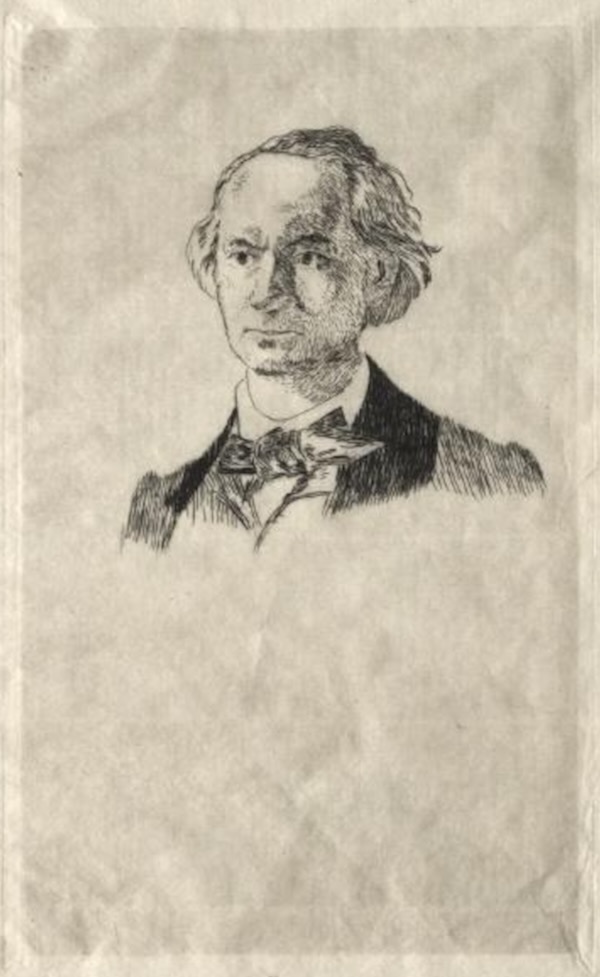
The extended excerpt from the essay by Paul Bourget, nineteenth century French novelist and critic, about Charles Baudelaire is a bit of a departure for us. It perspicaciously recognizes that the splendid splenetic, despite penning one of the most oft-cited essays on dandyism, is really a decadent. We usually ignore decadence lest we inadvertently contribute to the common confusion conflating decadence with dandyism. But we made an exception for Bourget’s essay: By placing Baudelaire firmly among the decadents, Bourget reinforces our own assessment that Baudelaire was no dandy.

Turning from the analytical to the lyrical, Proust’s initial description of Robert de Saint-Loup from “In Search of Lost Time” serves equally well as a depiction of a certain dandy ideal. Saint-Loup is “tall, slender, inflexibly erect, his head always held as high, his gaze impassive, or rather, I should say, implacable, devoid of that vague respect which one has for the rights of other people.”

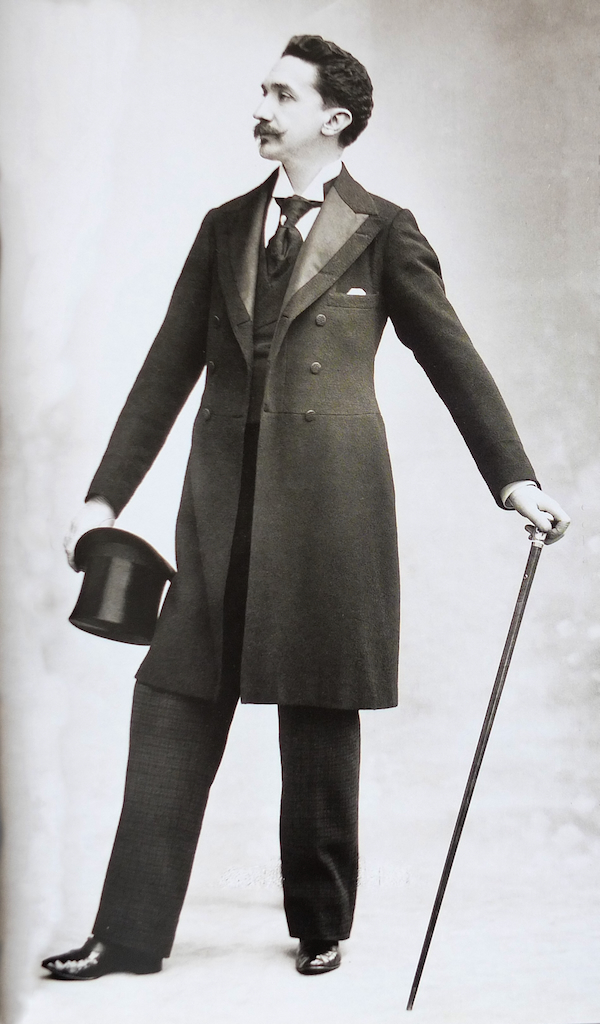
(Pictured above is Vicomte Robert d’Humieres, one of Proust’s models for the character.)

Saint-Loup must have been subconsciously on the mind of the Junta when it named physical distinction as the primary quality of a dandy: “It is impossible to cut a dandy figure without being tall, slender and handsome.”

Saint-Loup also is a paragon of sprezzatura as the clothes he wore are “of a pliant elegance, with nothing swagger, nothing formal about them, no stiffness or starch.”

Soldier, scholar and womanizer, the charming and dashing Saint-Loup is one of the three central dandies in the book, along with the ill-fated Charles Swann and Saint-Loup’s louche uncle Baron de Charlus. By the end, however, he turns out not to be all that he appears; and like almost every major character in the novel, he turns out to be bisexual.

Finally, we have brought into the Library an article about artist Fernand Khnopff’s villa, to which we had previously linked in an appreciation of the artist.

Digg this story Add to Del.icio.us Add to Reddit Netscape

Pity in Pink

pink-flannel-suit.jpgOften criticized as Dandyland’s Grand Inquisitors, Dandyism.net has taken a bold step toward coming to terms with dandyism in the new millennium by forging an international alliance with the pink panther pictured at left.

Or rather, he’s formed an alliance with us.

The chap in question is John Dodelande, the 18-year-old French wunderkind (if a Frenchman can be a wunderkind) who has taken le tout Paris by storm with his audacious fashion designs, as well as stylish furniture, retail boutiques, restaurants, yachts and literary publications.

That’s if you believe his publicist.

Doodles (our term of endearment for him) loves pink suits: He not only designs them, he actually wears them in public, including on the cover of his revolutionary magazine-cum-book, and all over his website, which includes periodic posts about dandyism.

Doodles has also invented Doodism, a sort of 21st-century combination of dandyism and dodos, along with the innovative concept “Wo Wi Wo,” which stands for “World With Words.”

With his youthful good looks, flamboyance, enterprising creativity, and Dada penchant for jabberwocky, Doodles has just eclipsed former Dandyland exile Doran Wittelsbach as frontrunner for 2008 Dandy of the Year.

Despite his sartorial judgment, Doodles’ dandy acumen is rapier-sharp: His website describes D.net as “Le meilleur site américain sur le dandysme.”

So when his factotum sought out an interview with us, we could hardly refuse. The French version appears here, while the English version follows below.

During the course of the interview, D.net’s Junta opined on a variety of subjects of interest primarily to ourselves. We also discovered that when translated into French, our dry understatement becomes riddled with exclamation points, the punctuation equivalent of Gallic gesticulations when speaking.

Continue »

Digg this story Add to Del.icio.us Add to Reddit Netscape

The Return of Aubrey Weirdsley

img_02741.jpgTo paraphrase Schopenhauer, dandies are like drops of mist forming a rainbow in the sunlight. When one drop of water disappears, another comes to take its place.

So while Sebastian Horsley has been denied entry into the U.S, blogger aubrey_weirdsley has returned to Dandyland after a year in digital exile.

“I’ve had nothing to say and no wish to share,” writes Weirdsley in his first post. “But people contact me now and again and say that I am missed, and although I don’t give a rusty-badger-crap about being known to the general public, it is nice that some of the few people that I care about care about me as well.”

Now writing under the nom de plume The Dandiest, Mr. Weirdsley (aka Doran Wittelsbach) is known for his impressive image collection, handlebar mustache that is all handles and no bar, and penchant for goth girls still shy of 21. He also shares the dual ignominy of being both a practicing Satanist and a former Dandyism.net contributor.

Moreover, even the most claret-clouded reader can see by the photo above why dressing like Mr. Weirdsley gets you -5 points on the dandy quiz.

Weirdsley’s inaugural post also recounts a gesture sure to be lauded by fellow dandypunk Horsley (indeed the pair should found a Mutualp1010015000031.jpg Humiliation Society). It seems Mr. Weirdsley has recommitted himself to cause of dandyism by mortifying his flesh with the word “dandy.”

But since all great dandies go into exile, Mr. Weirdsley’s return makes him the leading candidate for 2008 Dandy of the Year.

Digg this story Add to Del.icio.us Add to Reddit Netscape

Who’s The Dandy? — manton vs. Will

manton4.jpgwill2.jpg

Recently a reader left a comment suggesting that no one should be allowed to dispense sartorial criticism without first offering himself up for scrutiny.Since he couldn’t possibly have been referring to us, we hereby present for your edification, entertainment and target-practice, two of the most exacting and opinionated micro-celebrities of the Internet men’s clothing world: manton and Will.

Writing under the username “manton,” former Republican speechwriter Michael Anton has posted over 10,000 times on the minutiae of men’s dress on the sites Style Forum, Ask Andy About Clothes and The London Lounge. His obsession with precise measurements led us to dub him “the quarter-inch dandy.”Under the pseudonym Nicholas Antongiavanni, Anton authored “The Suit,” in which he presumes to tell the world what dandies like and don’t like:

Because of its smartness and rarity, a single-breasted jacket with peak lapels is greatly favored by dandies.

Dandies like ticket pockets for the extra panache they impart.

Dandies enjoy silk, but only the the rough, matte-finished weave known as dupioni.

Dandies take great care in selecting their socks.

Above all, no dandy wears solid socks, for that is stylistic surrender. The dandy’s favorite sock pattern has always been the clock.

For the record, Anton uses the term “dandy” far more broadly than we do. Furthermore, speaking authoritatively on behalf of all dandies is something that only the Junta is entitled to do, and then only when we speak ex cathedra. We’ve given our imprimatur, though, to a few of Anton’s better pronouncements.

More avuncular in advice and modest in ambition is Will, who writes the blog A Suitable Wardrobe. Will has offered his opinion a mere 7,000 times on the three main men’s clothing sites. A professional consultant and public speaker, his blog is a fond discourse on classic clothing, heavily annotated with splendid illustrations from Apparel Arts and Esquire of the 1930s. He is one of D.net’s competitors in the Fabby Awards.

Both Anton and Will are certainly masters of the basics — the grammar, if you will — of how to dress. But just as a sentence can be grammatically correct but ineloquent, so to a man can be correctly dressed and inelegant.

And so we ask you: Who’s The Dandy?

Continue »

Digg this story Add to Del.icio.us Add to Reddit Netscape

Socks Appeal

socks.jpgDuring my apprenticeship of the dandy art, I’ve learned that dandyism is not defined by a specific look from a certain era, but instead is an approach to wearing clothes, independent of time and place, that produces an effect we call dandyism. There is no one way to dress like a dandy, only ways that succeed or fail to varying degrees. And nowhere is the attempt to adopt a standardized dandy uniform more futile than in the attempt to replicate the way dandies dressed a hundred years ago.

No, instead a man simply dresses in his own particular way, and his movements and demeanor animate his clothing. And crystallized within the elusive effect of this combination of man and clothing is that certain something we call dandyism.

Now ours is an age of overstatement. I have it on good authority from a journalist, and journalists can always be trusted, that when a certain dandypunk removed his pustule-spangled mantool from the nearest harlot long enough to answer some questions (about himself) for an article, he was wearing a suit pockmarked with shiny red sequins.

Yet according to Max Beerbohm, part of the magic of dandyism lies in producing the supreme effect through the least extravagant means.

So while I still find pleasure in donning full dandy regalia for a night at the opera, lately I find I take greater sartorial pleasure in outfits whose dandy factor is far less obvious.

Continue »

Digg this story Add to Del.icio.us Add to Reddit Netscape